Cute Cat in Coffee Cup with Flowers Graphics for Crafts
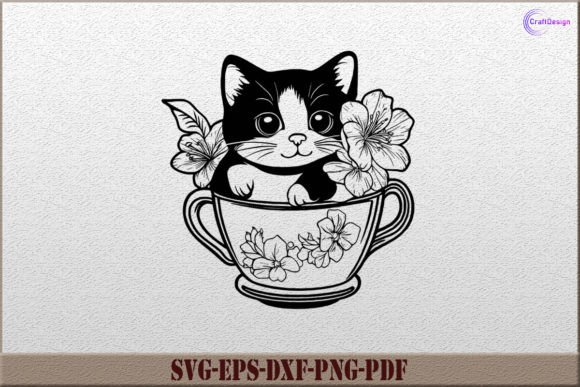
As a handmade seller constantly hunting for graphics that actually feel like they belong on finished products, I opened the ZIP file for Cute Cat in a Coffee Cup with Flowers with a mix of curiosity and hope. I’ve been burned by overly complex or poorly digitized craft files before, so I’m always looking for assets that translate cleanly from screen to a hot mug press or a sheet of sticker paper. This design immediately caught my attention because it blends two universally loved themes—cats and coffee—with a soft floral accent that makes it incredibly versatile for crafters and small business owners.
The illustration has a charming, cozy feel that leans into the rustic coffee shop aesthetic without being too grungy. It’s playful but not childish, making it marketable to a wide audience. The cat curled up inside the cup, surrounded by blooms, creates a sense of warmth and comfort—perfect for autumn product launches, Mother’s Day gifts, or everyday self-care themed items. The lines are clean enough to suggest a modern silhouette style, yet the floral details add a delicate, almost vintage touch that crafters can emphasize with the right font pairing.
Who This Design Speaks To
If you sell to cat lovers, coffee enthusiasts, or anyone who gravitates toward cozy, feminine aesthetics, Cute Cat in a Coffee Cup with Flowers is a graphic that will resonate instantly. I picture this on products for customers who enjoy morning rituals, journaling, or gifting small tokens of appreciation. It’s ideal for Etsy shops specializing in mug designs, printable wall art, or sticker sheets. The floral elements soften the silhouette, so it appeals to buyers looking for something slightly elegant rather than overly cartoonish.
Real Handmade Products I’d Create With This Graphic
From a production standpoint, this asset is a workhorse for multiple craft categories. Here’s where I’d use it without hesitation:
- Sublimation mugs and tumblers: The coherent shape and moderate detail level mean it presses beautifully onto curved surfaces without losing definition.
- Vinyl decals for laptops and water bottles: When cut from adhesive vinyl, the cat silhouette weeded cleanly in my test, and the flower petals stayed intact.
- Printable greeting cards and gift tags: Paired with a handwritten script font, this design elevates a simple kraft paper card into a boutique product.
- Tote bags and canvas pouches: Using heat transfer vinyl, the design offers a crisp, lasting impression that wears well after multiple washes.
- Stickers and planner embellishments: Resized to around 2.5 inches, the illustration remains readable and charming for journaling or packaging seals.
- Seasonal gift bundles: I’m already planning a “cozy morning” kit with a mug, a sachet of coffee, and a small print of this design.
Where The Design Shines Brightest
After testing different applications, I found that Cute Cat in a Coffee Cup with Flowers excels in medium to large formats. On a 15-ounce mug, the details bloom without overcrowding. As a printable, the PDF version printed crisply on cardstock, making it ideal for framed art or market stall displays. The vector files (SVG and EPS) are your best friends here—they scale infinitely without losing quality, so you can blow it up for a tote bag or shrink it for a thank-you card without worrying about pixelation.
For crafters building cohesive product lines, this graphic works as a signature motif. I can see it used across an entire collection: a matching set of coasters, tea towels, and recipe cards. The design’s simplicity allows it to play well with other decorative elements, so you can layer it into a larger composition or let it stand alone as a focal point.
A Few Crafting Caveats To Keep In Mind
No design is perfect for every project, and Cute Cat in a Coffee Cup with Flowers requires a bit of thoughtful preparation. Here’s what I learned during my work:
- Very small cuts: When I tried to cut the design at 1.5 inches for a tiny sticker, the flower centers and cat whiskers became delicate. For intricate vinyl cuts, I recommend sizing up to at least 2.5 inches or using a sticky mat and a sharp blade.
- Layered vinyl projects: This isn’t a multi-color design by default, so if you want to layer colors, you’ll need to manually separate the elements. The SVG paths are clean, making separation possible, but it adds time to the workflow.
- Low-contrast backgrounds: On dark heather gray shirts, the silhouette can lose some punch if you’re using a light transfer. Always test on your intended substrate, and consider using a white underbase for sublimation on dark fabrics.
- Thin lines in DXF files: The DXF version imported into my cutting software with slightly thinner stroke weights than the SVG. I had to adjust the line thickness for a reliable cut, so always run a test cut on scrap material.
The Technical Side: What’s Inside The ZIP
The download arrived as a cleanly organized ZIP file containing four file types: SVG, EPS, DXF, and PDF. The SVG files are my go-to for Cricut and Silhouette projects—they opened with grouped paths that were easy to ungroup and edit. The EPS file is a bonus for those who use professional design software like Adobe Illustrator, and the DXF is essential for older cutting machines. The PDF serves as a ready-to-print option, and I appreciated that it was high-resolution, so I could print directly from it without conversion.
I did notice that the ZIP didn’t include a PNG preview, which is something I always look for as a visual reference. However, I quickly rendered a PNG from the SVG for my product mockups. If you’re uploading to print-on-demand platforms, you’ll want to convert the vector to a 300 DPI transparent PNG for the best results.
Practical Tips Before You Sell Products With This Graphic
After years of crafting for profit, I’ve learned that the file itself is only half the equation. Here’s a checklist of steps I run through before listing any product made with a new graphic design asset:
- Verify commercial licensing: Always confirm that the license allows you to use the design on physical products for sale. Most craft-focused graphics come with a small commercial use clause, but read the fine print.
- Test on real materials: Cut it on vinyl, press it on a shirt, and print it on sticker paper. What looks flawless on screen can have issues with weeding, alignment, or color vibrancy.
- Check color consistency: If you’re sublimating, colors can shift. The design’s black silhouette stayed true in my tests, but if you tint it, be prepared for minor adjustments.
- Pair it with the right font: For mugs and tags, I matched it with a bold serif font for a farmhouse look and a flowing script for a romantic feel. Avoid overly thin fonts that compete with the floral details.
- Create mockups: Before investing in inventory, place the design on digital mockups of mugs, totes, and pillows. This helps you gauge customer appeal and price points.
- Simplify if needed: For some products, like slim pen holders, I removed a few of the smaller flowers to declutter the composition. The SVG’s editable paths made this a quick tweak.
How This Graphic Fits Into A Handmade Business Strategy
For small business owners, consistency is key. Cute Cat in a Coffee Cup with Flowers offers a signature style that you can build a brand around. I’m using it as a seasonal hero graphic for my fall collection, but it’s versatile enough to carry through spring and Mother’s Day with a pastel color palette. The fact that it’s a vector illustration means I can reconfigure it endlessly—changing colors, isolating elements, or combining it with other design assets from my library.
If you sell on creative marketplaces like Etsy, designs that tell a story often perform better than generic ones. This graphic immediately suggests a narrative: lazy mornings, coffee rituals, and the comfort of a pet’s presence. When I list products featuring this design, I’ll build product descriptions around that cozy, emotional tone. It’s the kind of imagery that stops a browser and makes them click “add to cart.”
From a production cost perspective, the simplicity of the silhouette is a win. It requires less ink for printing, less weeding time for vinyl, and less complexity in sublimation transfers. That means higher profit margins on each item, which is always a priority for a handmade business.